On this page:
- What is deceased estate clearance?
- Before you start: legal and practical checks
- Step-by-step: how to clear a deceased estate in Geelong
- What to keep, sell, donate, recycle or dispose
- Geelong disposal options compared
- How much does deceased estate clearance cost in Geelong?
- Tips for families: clearing a loved one’s home with care
- Frequently asked questions
- Final takeaway
TL;DR: Deceased estate clearance in Geelong works best in seven steps: confirm who has authority, set a deadline, secure documents and valuables, sort room by room, sell or donate first, book removal for what’s left, then clean. Sorting before removal is the biggest cost saver, because Brad Loads It charges by volume ($80 per cubic metre). Council hard waste has strict eligibility rules, and hazardous items like asbestos and chemicals need specialist disposal.
Clearing the home of someone who has died is one of the hardest jobs a family or executor takes on. It mixes grief with paperwork, deadlines and a lot of physical work.
This guide walks through the process as it works in Geelong, from Highton and Belmont to Lara and Armstrong Creek. It covers what to check first, how to sort, where things can go locally, and what the clearance will cost.
What Is a Deceased Estate Clearance?
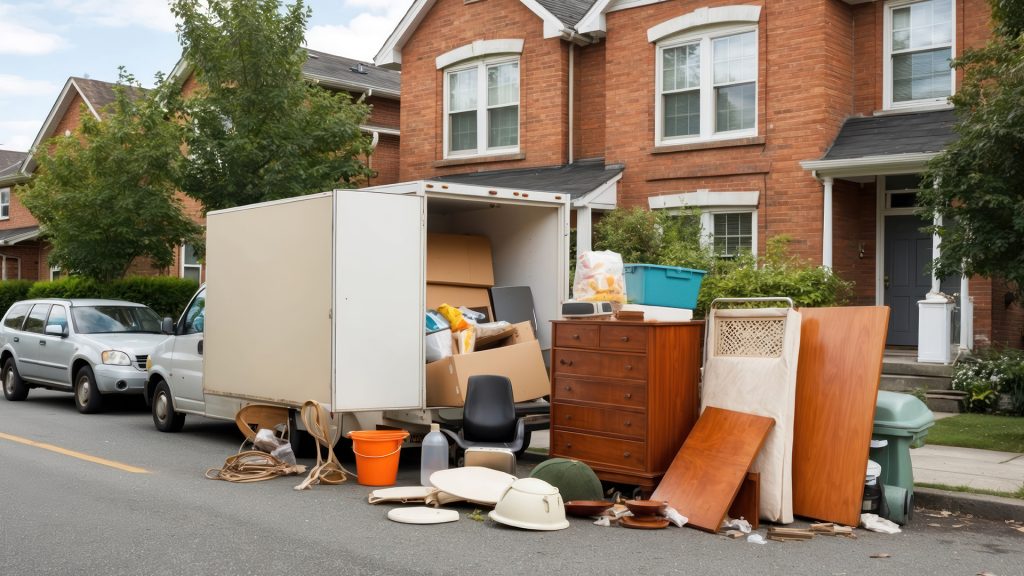
Deceased estate clearance is the sorting, removal and disposal of a person’s belongings after they pass away, so the property can be sold, returned to a landlord or handed back to an aged care or retirement provider. In Geelong it usually involves the executor, family and a removal team.
It is more than rubbish removal. Every item has to be sorted into what the family keeps, what can be sold or donated, what can be recycled and what goes to landfill.
Clearance is usually one of the last steps before a home is sold, leased or handed back. That often puts it on a deadline set by a settlement date, a lease end or a care provider.
Who is usually involved:
- The executor or administrator, who has legal authority over the estate and signs off on what leaves the house.
- Family members, who choose sentimental items and help sort.
- A landlord, property manager or aged care provider, if the home was rented or supplied.
- A removal team, who lift, load and dispose of what nobody is keepingWhat Is Deceased Estate Clearance?.
Before You Start: Legal and Practical Checks
Before anything leaves the house, confirm who has authority to act, read the will for specific gifts, and secure valuables and documents. In Victoria the executor named in the will manages the estate, and some estates need a grant of probate before assets are sold or distributed.
Getting these checks done first prevents two problems that cause the most stress: a valuable or promised item thrown out by mistake, and a family disagreement about who decided.
- Confirm the executor. If there is no will, the court appoints an administrator instead.
- Read the will for specific gifts. Items left to a named person must not be sold, donated or thrown out.
- Secure the property. Collect all keys, lock sheds and garages, and check whether the home insurance policy changes cover for an unoccupied home.
- Find important papers. Look for the will, bank and super statements, tax records, insurance policies and property titles.
- Arrange valuations if needed. Antiques, jewellery, art and vehicles may need valuing for the estate records or a fair split.
- Check your deadline. A rental, retirement village unit or aged care room often has a fixed hand-back date.
If the person was renting, contact the rental provider early. The notice rules for ending a tenancy after a renter dies are set by Victorian renting law, so check them with Consumer Affairs Victoria.
This guide is general information, not legal advice. For questions about probate or executor duties, speak with a solicitor or the Supreme Court of Victoria’s Probate Office.
Step-by-Step: How to Clear a Deceased Estate in Geelong
Most deceased estate clearances follow seven steps: agree who decides, set a deadline, secure documents and valuables, sort room by room, sell or donate what has value, book removal for what’s left, then clean. Doing them in this order saves time, money and family disagreements.
Step 1: Agree who makes the decisions
The executor has the final say, but families work best when everyone knows the plan. Agree early on how sentimental items will be shared and who can approve what gets removed.
Step 2: Work backwards from your deadline
Write down the hard date: settlement, lease end or the aged care hand-back. Then plan sorting weekends and the removal date back from it, leaving a buffer for the final clean.
Step 3: Secure documents, valuables and keepsakes first
Before any sorting starts, collect paperwork, jewellery, cash, photos and letters into one locked place. Check pockets, drawers, books and shoeboxes, because small valuables often hide there.
Step 4: Sort room by room into five groups
Use five clear groups: keep, family, sell, donate and remove. Coloured stickers or labelled boxes make it easy for helpers and the removal crew to see what goes.
Start with low-emotion spaces such as the laundry, garage or shed. That builds momentum before tackling bedrooms and personal items.
Step 5: Sell and donate before you book removal
Good furniture, antiques and collectables can go to online marketplaces, auction houses or dealers. Clean clothing, linen and homewares in good condition can go to local op shops and charities.
Every item sold or donated is volume you don’t pay to remove.
Step 6: Book removal for everything that’s left
Once sorting is finished, book a full-service removal team for the rest. With Brad Loads It, you point at what goes and the crew does all the lifting, loading and sweeping up.
Tell the team about anything heavy, awkward or hard to reach before the day. Remember that asbestos, chemicals and other hazardous waste need specialist disposal.
Step 7: Final clean and handover
With the house empty, arrange a clean and check the property against any lease, contract or care provider requirements. Take dated photos of each room for the executor’s records.
What to Keep, Sell, Donate, Recycle or Dispose
Sort every item into one of five routes: keep, sell, donate, recycle or dispose. In Geelong, whitegoods, scrap metal, e-waste and household batteries can be recycled free at the Drysdale Resource Recovery Centre, which keeps them out of landfill and lowers removal volume.
Item type | Best route | Geelong notes |
Wills, financial and legal papers | Keep (executor) | Don’t shred until the estate is finalised; ask the solicitor or accountant how long to hold records |
Photos, letters, heirlooms | Family | Scan photos so every family member can have a copy |
Good furniture, antiques, collectables | Sell | Get a valuation first for anything that may be valuable |
Clothing, linen, homewares in good condition | Donate | Wash and bag items; op shops can’t take stained or broken goods |
Whitegoods, scrap metal, e-waste, TVs, computers, batteries | Recycle | Free drop-off at Drysdale Resource Recovery Centre for Greater Geelong residents (domestic quantities) |
Mattresses and bed bases | Council collection or removal | Two mattress collections per financial year; since January 2026, mattress-style bed bases need a separate hard waste booking |
Broken furniture and general household junk | Remove | Full-service removal clears it in one visit |
Paints, oils, chemicals, asbestos | Specialist disposal | Not accepted in council hard waste or by Brad Loads It |
Tip: Photograph items before letting them go. Families often find it easier to part with an object once it’s recorded.
Geelong Disposal Options Compared
Geelong families have four main ways to clear an estate: council hard waste, DIY tip runs, a skip bin, or full-service removal. Council collections are cheapest but limited; full-service removal suits whole-house clearances and tight deadlines because the crew does all the loading.
Option | Best for | Cost | Your effort | Key limits |
|---|---|---|---|---|
Council hard waste collection | Small, non-urgent loads | Covered by the waste charge for eligible properties | High: you carry everything to the kerb | Two collections per financial year; the booker must live at the property for the collection week |
DIY tip runs to Drysdale RRC | A few trailer loads | $110 per heaped ute or single-axle trailer (up to 1 m³); $220 per tandem trailer (up to 2 m³) | High: hire, load, drive and unload | Mixed loads charged at $110 per m³; recyclables free |
Skip bin | Families with time and helpers to load | Varies by bin size and supplier | High: you load everything | Check whether a council permit is needed if the bin sits on the road |
Full-service removal (Brad Loads It) | Whole-house clearances and deadlines | $80 per m³ including labour and travel; minimum charge for small jobs | Low: you point, the crew loads and sweeps | No asbestos, chemicals or hazardous waste |
Watch the hard waste eligibility rule. The City of Greater Geelong requires the person booking to be living at the property for the full collection week. If a previous occupant has already used the year’s two bookings, you must wait until the next financial year.
For many deceased estates, those rules mean hard waste only suits a small part of the job. Most families combine donation and recycling with one full-service removal visit.
How Much Does Deceased Estate Clearance Cost in Geelong?
Brad Loads It charges $80 per cubic metre, which covers labour, loading and travel within the service area, with a minimum charge for small jobs. Because the price depends on volume, sorting, selling and donating before removal is the easiest way to lower the bill.
The table shows what different volumes cost at the published rate. These are illustrations, not quotes: the crew confirms the volume and gives an upfront price on site before any work starts.
Volume removed | Cost at $80 per m³ |
5 m³ | $400 |
10 m³ | $800 |
15 m³ | $1,200 |
20 m³ | $1,600 |
30 m³ | $2,400 |
What adds volume:
- Bulky furniture such as wardrobes, lounges and dining settings
- Garages, sheds and under-house storage, which often hold decades of items
- Garden waste, old timber and outdoor furniture
- Homes where belongings have built up over many years
Why disposal costs keep rising: Victoria’s landfill levy for Greater Geelong rose to $177.19 per tonne on 1 July 2026. Recycling whitegoods, metal and e-waste keeps them out of landfill, which is one reason sorting matters.
Tips for Families: Clearing a Loved One's Home with Care
Give yourselves time where the deadline allows, work in short sessions, and agree on sentimental items before anything is donated or removed. Let a removal crew handle the heavy lifting so family energy goes into the decisions only you can make.
- Keep sessions short. Two or three focused hours usually achieve more than an exhausting full day.
- Ask before you give away. Share a list or photos of sentimental items with the wider family before donating.
- Keep one “maybe” box. Unsure items go in it, and you review it at the end with fresh eyes.
- Record what leaves. A simple list of items sold, donated and removed helps the executor keep estate records.
- Don’t lift what you can’t. Heavy furniture, whitegoods and packed garages are where injuries happen.
- Look after each other. It’s normal for clearing a home to bring up grief, so take breaks and share the load.
Frequently Asked Questions
How long does a deceased estate clearance take in Geelong?
Sorting usually takes the longest, from a few days to several weeks depending on the home and the family. Once sorting is done, the physical removal is the quickest part. Ask the removal team for an estimate of time as well as price when they quote.
Do I need probate before clearing the house?
Not always, and it depends on the estate. Executors generally avoid selling or giving away valuable items until their authority is confirmed, but securing the home and removing perishables and obvious rubbish is a common first step. Check your situation with a solicitor.
Can I use the council hard waste collection for a deceased estate?
Sometimes, but the rules are strict. The City of Greater Geelong allows two hard waste and two mattress collections per financial year for eligible properties, and the person booking must live at the property for the collection week. Many estates don’t meet that rule.
What won't a rubbish removal service take?
Brad Loads It does not take asbestos, chemicals or other hazardous waste. Paints, oils and garden chemicals also can’t go in council hard waste. Use a licensed asbestos removalist and the City of Greater Geelong’s hazardous waste options for these items.
What happens to items that can be recycled?
Whitegoods, scrap metal, e-waste and household batteries are separated for recycling rather than landfill. Greater Geelong residents can drop domestic quantities of these off free at the Drysdale Resource Recovery Centre. Recycling also avoids the state landfill levy on those items.
How do I get an accurate quote?
Send photos of each room, the garage, shed and yard, and mention stairs, narrow access or very heavy items. The crew then confirms the volume on site and gives an upfront price before starting. Brad Loads It charges $80 per cubic metre with a minimum charge for small jobs.
Final Takeaway
A calm deceased estate clearance comes down to order: authority first, keepsakes second, removal last. Sorting, selling, donating and recycling before removal protects what matters to the family and cuts the volume you pay for.
If you’re clearing a home anywhere from Geelong West and Newtown to Grovedale, Bannockburn or Fyansford, Brad Loads It can take the heavy lifting off your hands. Call Brad on 0428 462 068 for an upfront quote.